Facebook
 X
 Pinterest
 Copy Link
How Does a 1031 Exchange Work? My Connecticut-to-Florida Investment Journey — Part 2
Selling an investment property in Connecticut and buying another in Florida? Here’s how the 1031 exchange process works and what I’m learning along the way.
In Part 1, I shared how I decided to exchange my one-bedroom investment condominium in Hamden, Connecticut, for a larger waterfront investment property in St. Petersburg, Florida.
Now, let’s talk about the process.
A 1031 tax-deferred exchange allows qualifying real estate investors to sell one investment property and reinvest in another while potentially deferring capital gains taxes.
The concept is straightforward, but the timing and preparation are extremely important.
Step 1: Research Your Replacement Property Before Selling
This was my starting point.
I flew to Florida, toured properties, and determined what price range I needed to consider before adjusting the asking price of my Connecticut condo.
Once I understood my options, I reduced the price of my investment property at 22 D2 North Lake Drive in Hamden.
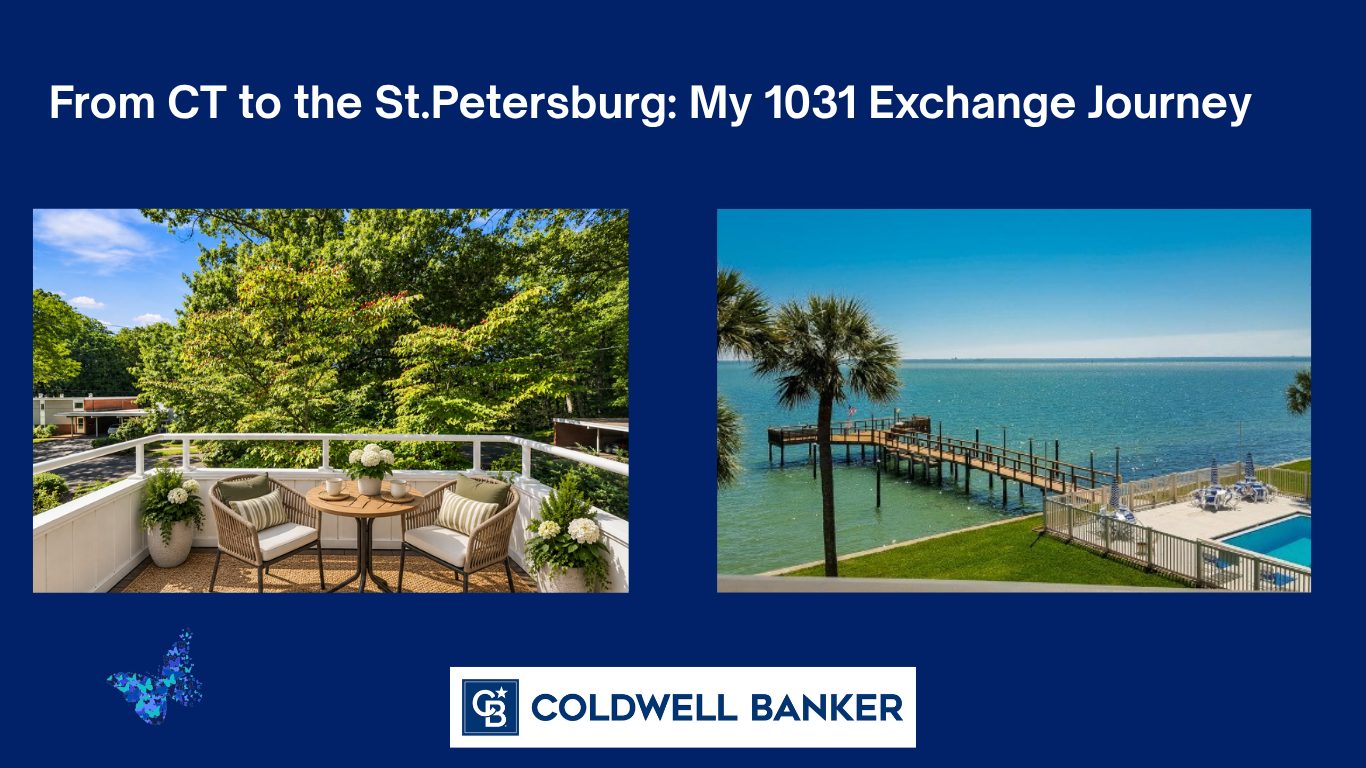
It went under contract quickly, allowing me to submit an offer on a waterfront condominium at Seapointe Terrace, 7530 Sunshine Skyway Lane South, Unit 115, in St. Petersburg.
My advice: Research your replacement market early. Don’t wait until your Connecticut property closes to start exploring your options.
Step 2: Work With a Qualified Intermediary
One of the most important requirements of a typical 1031 exchange is using a qualified intermediary.
This independent professional facilitates the exchange and handles the proceeds from the sale of your original investment property.
You generally cannot receive the sale proceeds yourself and then simply use that money to purchase another property while expecting the transaction to qualify.
The exchange must be properly structured before the Connecticut property closes.
Step 3: Understand the 45-Day and 180-Day Rules
Two deadlines are especially important.
45-Day Identification Rule: After closing on the sale of your original investment property, you generally have 45 calendar days to formally identify your replacement property in writing.
180-Day Completion Rule: You generally must complete the purchase within 180 calendar days after the original property’s closing, or by your applicable tax-return deadline, including extensions, if earlier.
These deadlines run at the same time, not consecutively.
Missing either deadline can jeopardize the tax benefits of the exchange.
Step 4: Coordinate Both Transactions
My Florida replacement property is a two-bedroom, two-bathroom waterfront condominium with approximately 1,200 square feet, direct waterfront exposure, and front and back patios.
We’ve completed the purchase contingencies, and I’m awaiting final condominium management approval.
My exchange is still in progress.
Coordinating two transactions in different states requires careful communication among real estate professionals, attorneys, the qualified intermediary, and the parties involved.
It’s also important to review the purchase price, equity, financing, and potential taxable proceeds with your tax advisor.
Could a 1031 Exchange Work for Your Connecticut Investment Property?
If you own a rental property in Hamden, New Haven, Wallingford, North Haven, Cheshire, Milford, or surrounding communities, a 1031 exchange may be worth exploring.
Whether you’re considering Florida waterfront real estate or another investment opportunity, planning ahead can make a significant difference.
As a Connecticut Realtor and real estate investor navigating my own exchange, I understand the importance of pricing your property strategically and preparing for your next investment.
#HeikeSeverine #ColdwellBankerCT #CTRealEstateExpert
Thinking about selling your Connecticut investment property? Let’s discuss your options.
Call, email, or text anytime to discuss your property.
Heike (Hyka) Severine, CT Real Estate Expert in New Haven County
📞 860-385-6315
✉️ Heike@CTRealEstateExpert.com
MoveMeter – Check this out!
This article is for educational purposes and is not tax or legal advice. Consult a qualified intermediary and tax professional before starting a 1031 exchange.
Coming Next — Part 3: Why I’m Exchanging My Connecticut Investment Condo for a Florida Waterfront Property.