Facebook
 X
X
 Pinterest
 Copy Link
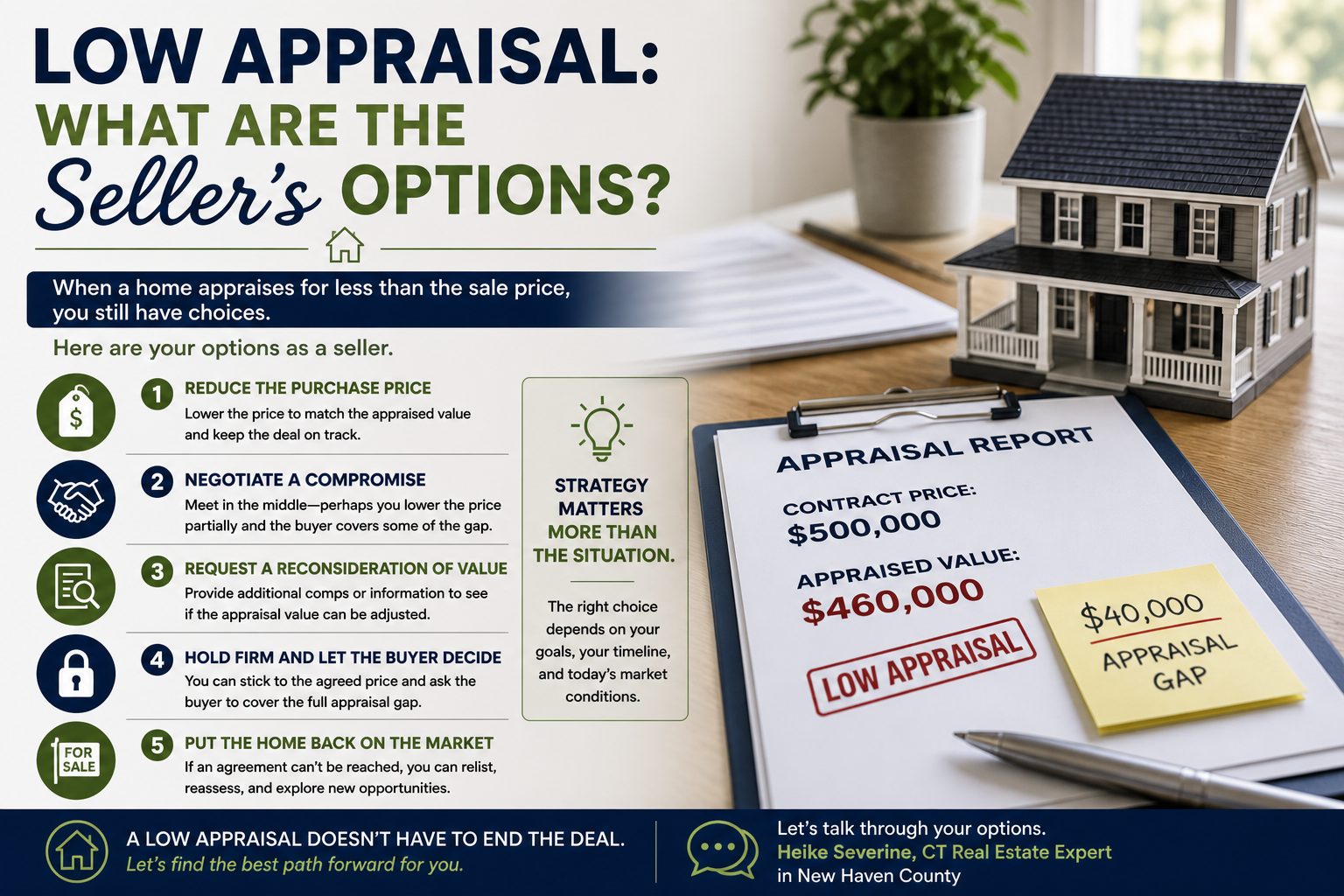
Low Appraisal: What Are the Seller’s Options?
What happens when your home appraises for less than the agreed sale price—and what can you do as a seller?
When a low appraisal comes in, you still have several options—but the right move depends on your goals, your timeline, and how strong your position is in the market.
Why a Low Appraisal Matters for Sellers
Once you’re under contract, it’s easy to feel like the deal is almost done.
But if the buyer is financing their purchase, the lender will require an appraisal—and if that value comes in low, it can disrupt the transaction.
This creates a gap between:
- The agreed-upon purchase price
- The lender-approved appraised value
That’s when understanding low appraisal: what are the seller’s options becomes essential.
Why Appraisals Come in Low
Before reacting, it’s important to understand why this happens.
Common reasons include:
- Recent comparable sales supporting a lower value
- Rapid market shifts
- Unique features that don’t translate well in appraisals
A low appraisal isn’t always a reflection of your home’s true market value—but it does impact the buyer’s ability to secure financing.
Option 1: Reduce the Purchase Price
One of the most straightforward options is to lower the price to match the appraised value.
This can help:
- Keep the deal together
- Avoid going back on the market
- Maintain momentum with a qualified buyer
While not ideal, this option is often the simplest path forward.
Option 2: Negotiate a Compromise
In many cases, the buyer and seller meet somewhere in the middle.
For example:
- The seller reduces the price partially
- The buyer brings some additional cash to closing
This shared solution can help both sides move forward without starting over.
Option 3: Request a Reconsideration of Value
If you believe the appraisal is inaccurate, you may have the opportunity to challenge it.
This involves:
- Providing stronger or more recent comparable sales
- Highlighting features the appraiser may have undervalued
While there’s no guarantee the value will change, it can be worth exploring in the right situation.
Option 4: Hold Firm and Let the Buyer Decide
As a seller, you’re not obligated to adjust your price.
You can choose to:
- Stick with the agreed price
- Ask the buyer to cover the full appraisal gap
This strategy may work if:
- You have backup offers
- Demand in your area is strong
- You’re not under pressure to sell quickly
Option 5: Put the Home Back on the Market
If negotiations don’t work out, the deal may fall apart.
At that point, you can:
- Relist your home
- Reassess pricing strategy
- Evaluate feedback from the appraisal and previous buyers
However, it’s important to consider:
- How long your home has been on the market
- Whether a new buyer may face the same appraisal challenge
Strategy Matters More Than the Situation
A low appraisal can feel like a setback—but it’s really a decision point.
Your best option depends on:
- Your timeline
- Your financial goals
- Current market conditions in New Haven County
Navigating low appraisal: what are the seller’s options isn’t about reacting quickly—it’s about making the smartest move for your situation.
Final Thoughts
A low appraisal doesn’t automatically mean the deal is over.
With the right strategy, you can keep the transaction together, renegotiate effectively, or reposition your home for a stronger outcome.
Let’s Talk Through Your Options
When you’re ready, let’s connect.
Heike Severine, CT Real Estate Expert in New Haven County
📞 860-385-6315 |
✉️ Heike@CTRealEstateExpert.com
MoveMeter – Check this out!